 Buda Castle Buda Castle, Budapest
When you visit Buda Castle Budapest during the annual Medieval Day in October, you step into a world of kings, knights and legends. Among the most fascinating tales linked to the Castle are those of the basilisk – a terrifying creature of medieval imagination that appears not only in stories but also in real archaeological finds from the Castle District.
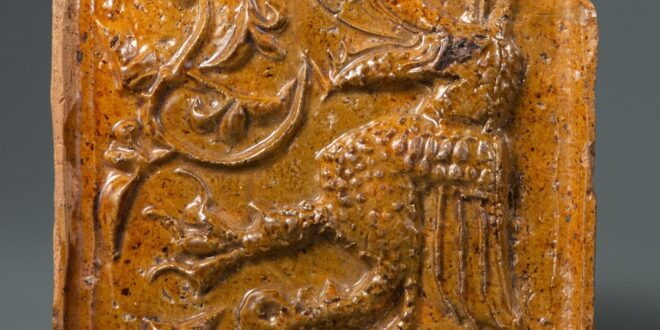
In the 1950s, excavations at the Royal Palace unearthed a small lead basilisk, thought to have decorated a liturgical object placed in the royal chapel as a donation. Centuries later, another extraordinary discovery came to light in Csónak Street: a 14th-century stove tile, coated with a yellow glaze, bearing the image of a basilisk. This tile is unique, with no known parallels so far, making it one of the most remarkable medieval artefacts found in Hungary.
The tile’s imagery is striking. On its surface, a basilisk is depicted with serpent-like body and rooster-like features, its open beak releasing curling vine motifs that symbolise its fiery, poisonous breath. Medieval bestiaries – “natural history” books of the 1st–2nd centuries AD onwards – describe the basilisk as the “king of snakes,” born from a rooster’s egg. Legends claimed its deadly stench could kill serpents, its fire could burn birds from the sky, and its gaze alone could strike down a human. Its hiss was a death omen, and its bite caused hydrophobia. Only one animal, the weasel, was believed capable of defeating the basilisk, sacrificing itself in the process.
For medieval Hungarians, these depictions were more than just decorations. They embodied the eternal struggle between good and evil, fear and courage. The basilisk, as a guardian of treasure or symbol of sin, was a constant reminder of danger – but also of the heroism needed to face it. The fact that such imagery appeared in the very heart of the royal court at Buda Castle tells us how deeply these myths were woven into daily life and royal symbolism.
Today, visitors to Buda Castle Budapest Medieval Day can immerse themselves in these same legends. Knights clash in tournaments, storytellers revive the myths of dragons and basilisks, and archaeologists share the fascinating finds that connect us directly to Hungary’s medieval past. It is an opportunity not just to enjoy a festival, but to step into a world where myth and history meet.
Based on the writings of Eszter Magyar and Judit Benda. Excavating archaeologists: László Gerevich and Anikó Tóth. Locations: Budapest I, Castle District, Royal Palace and Csónak Street 1–3. Photography: Ákos Keppel.