 Buda Castle Buda Castle, Budapest
When we think of King Sigismund of Luxembourg (1387–1437), ruler of Hungary and later Holy Roman Emperor, one of his most famous legacies is the Order of the Dragon (Societas Draconistrarum). Founded on 12 December 1408 by Sigismund and his second wife, Queen Barbara of Cilli, the Order was both a political alliance and a chivalric brotherhood that bound Hungary’s most powerful noble families to the crown.
Twenty-four baronial families were among the founding members, rewarded with royal lands and the privilege of serving in the king’s council. But the order was not only about prestige at court – it also had a practical and urgent purpose. Hungary stood on the front line of Ottoman expansion into Europe, and the knights of the Dragon Order were pledged to defend the kingdom’s southern borders. Under the leadership of the Italian condottiere Pippo of Ozora, this vow led to the strengthening of the southern border fortresses, a system of defences that would play a crucial role for centuries.
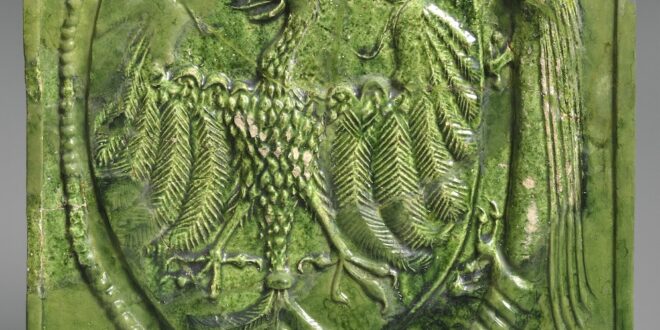
The Order’s symbol became one of the most recognisable emblems of the royal court: a coiled dragon, curling its tail around its neck to form a circle, marked with a red cross upon its back. This emblem appeared not only on armour and banners but also on more everyday objects, such as decorated stove tiles discovered in the Buda Castle District. These finds show how deeply the dragon motif penetrated both the royal household and wider courtly culture in medieval Hungary.
For modern visitors to Buda Castle Budapest, the story of the Dragon Order brings to life a world of alliances, pageantry, and defence against formidable enemies. It also connects Hungarian history to a wider European stage – after all, the order’s fame spread so widely that centuries later it was even remembered in the legends surrounding Vlad Țepeș, better known as Dracula, whose father was a member.
The legacy of the dragon – both as a symbol of loyalty and as a guardian against danger – remains one of the most fascinating medieval stories linked to Buda Castle.
Based on Ildikó Bruda’s description. Excavating archaeologist: Vilmosné Bertalan. Location: Budapest I, Úri Street 72. Photography: Ákos Keppel.
Image source: Buda Castle – Budapest History Museum Facebook